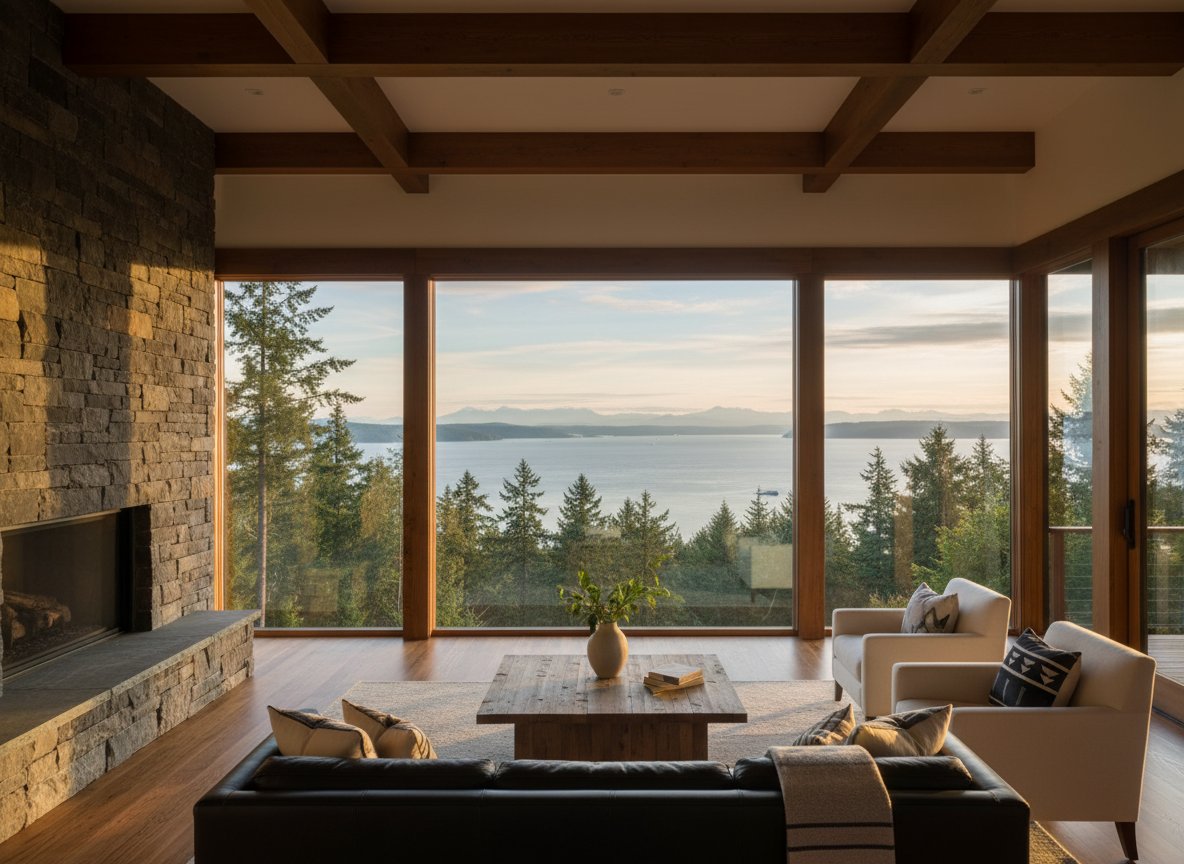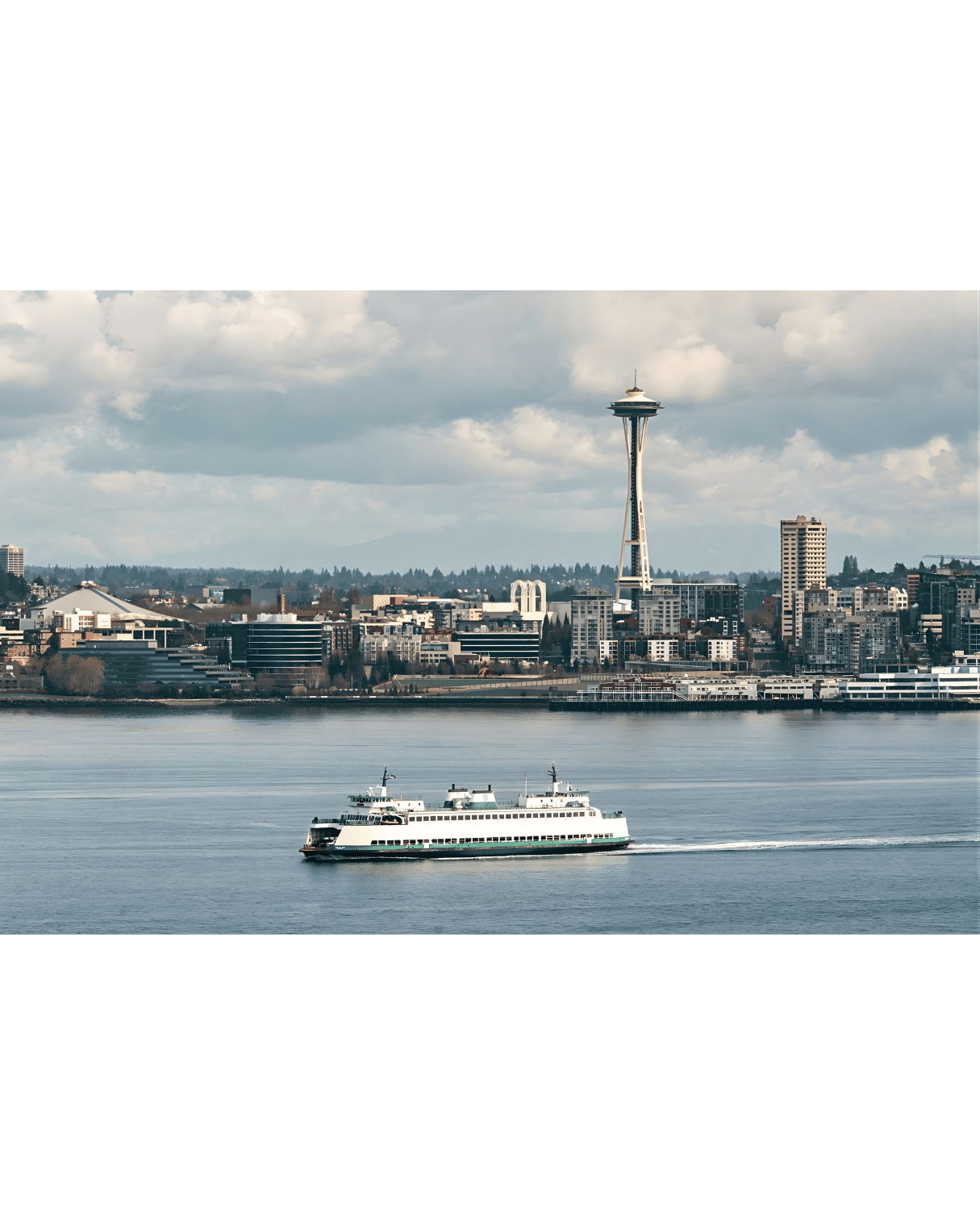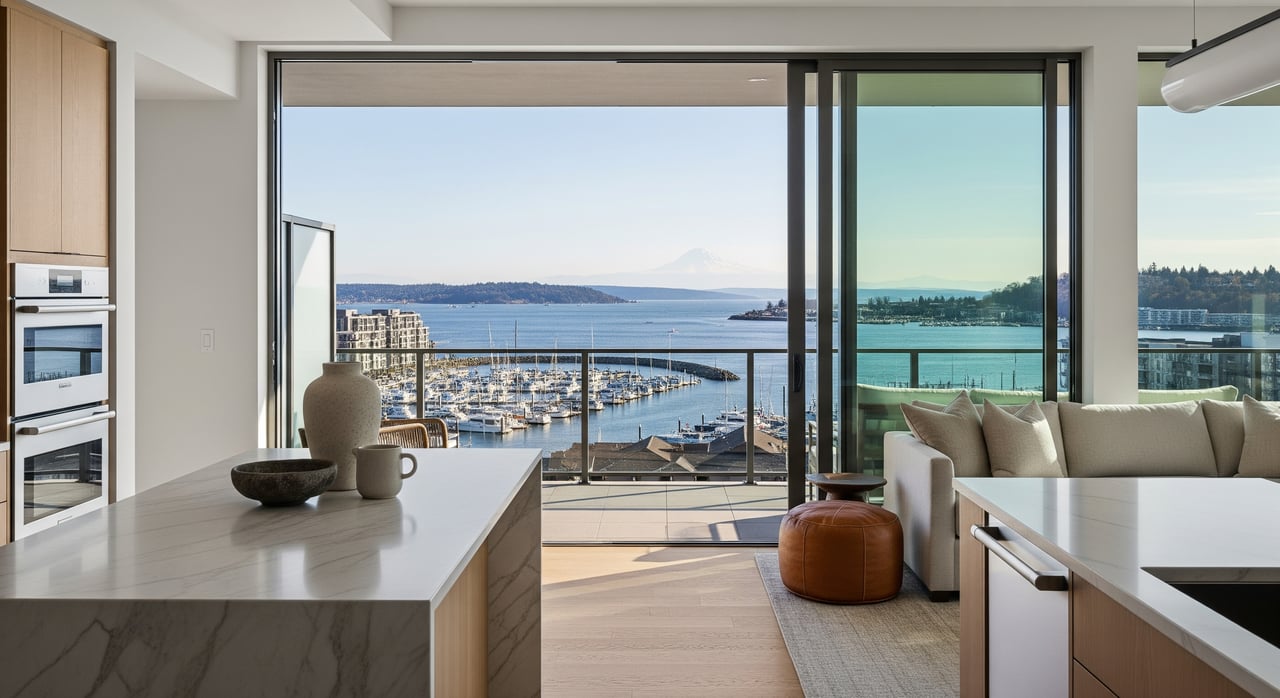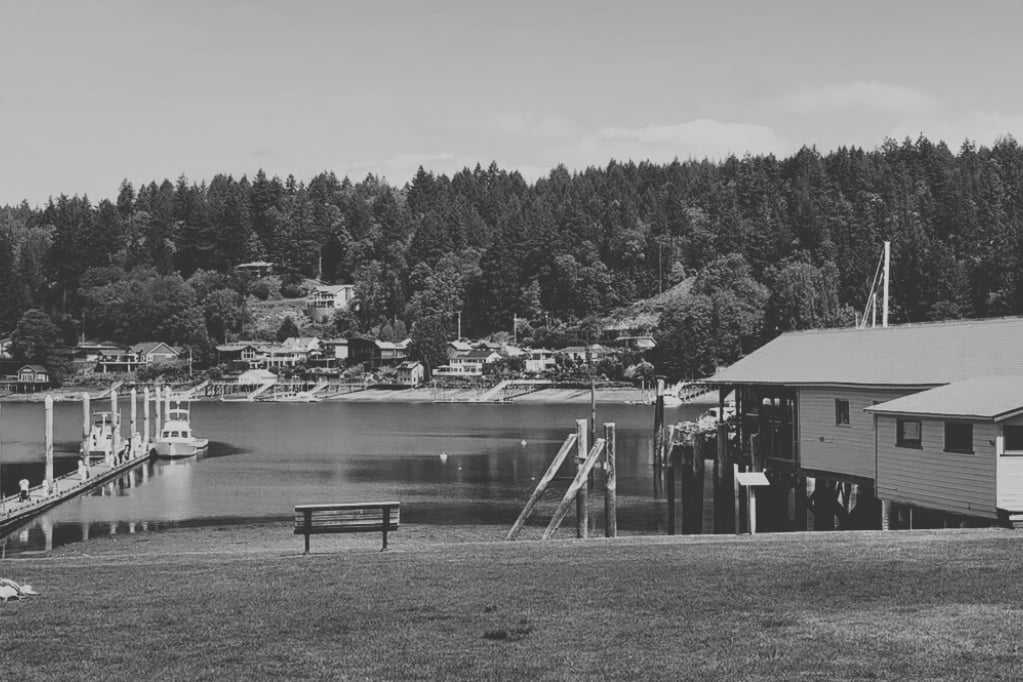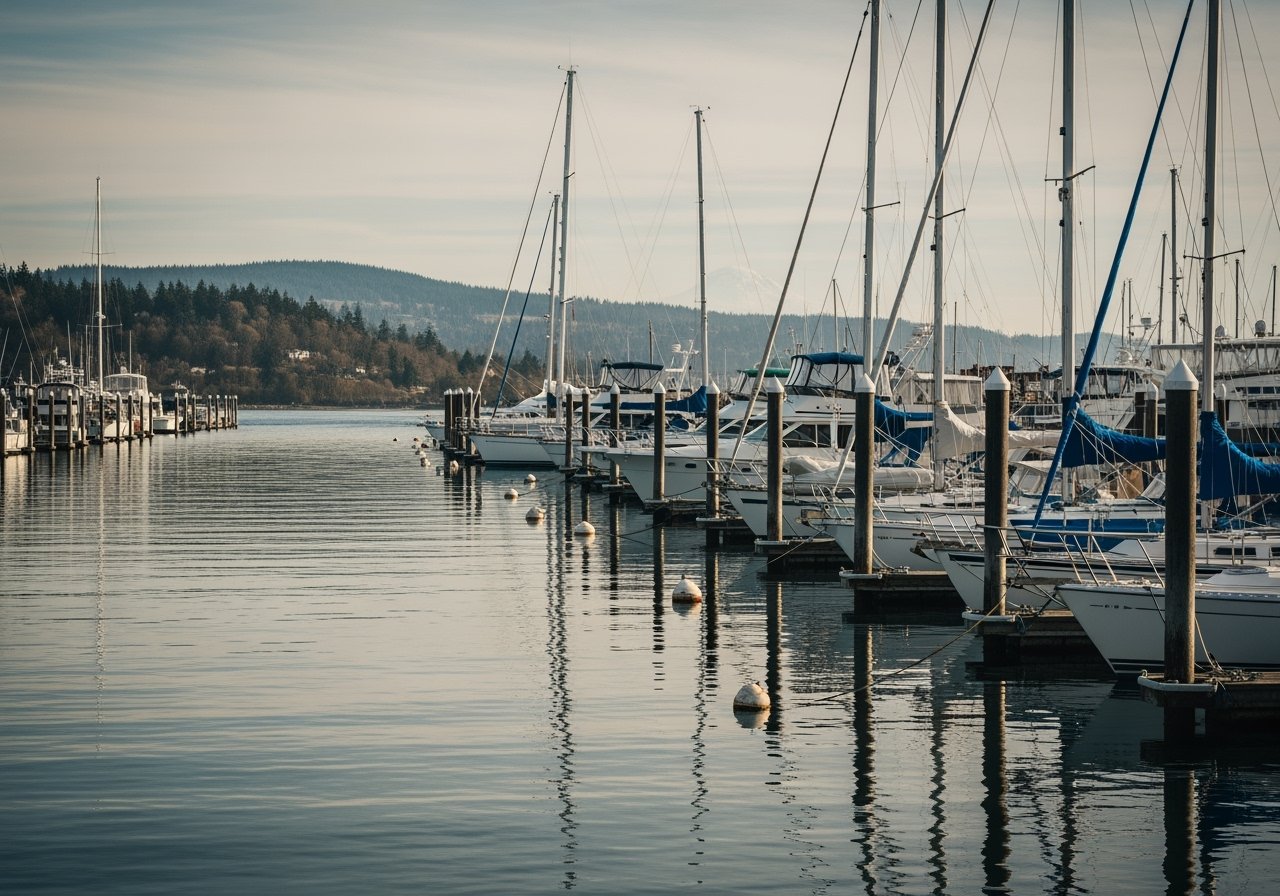
Walk Bay Street on a September morning and the block outside the Port Orchard Public Market smells like coffee and bacon before 7 a.m. A new sign hangs at 715 Bay Street. A family with a dog on a leash is deciding between a booth by the window and one closer to the door. Down the block, past the marina and the foot ferry dock, the old theater marquee is still dark, the way it has been for years.
Both of those facts are true on the same street at the same time, and that gap is the actual story of downtown Port Orchard this fall. Bay Street does not run on one clock. It runs on at least three, and they move at wildly different speeds. This season, two of them moved. The third one is still stuck where it was in 2019.
The Storefront Clock Just Reset, After Running Slower Than You'd Think
The new sign belongs to Rustica Grille, a steakhouse serving bison burgers, country breakfasts and an all-you-can-eat salad bar seven days a week from 6 a.m. to 10 p.m., one of the longest daily service windows on Bay Street. Owner Katie Hudkins described her goal simply: a "family-friendly, high-quality food option" for the neighborhood, and the setup backs that up. Boaters and travelers can order ahead using a QR code posted at the marina and at the Port of Bremerton's airport, a detail that only makes sense once you notice how much of downtown's daytime traffic still arrives by water rather than by car.
Here's the part that's easy to miss if you weren't watching the storefront the whole time. Rustica Grille didn't open into an empty lot. It opened into the exact space that The Dock Bar & Eatery occupied for nine years, before that restaurant closed for good on August 31, 2024, citing an economy that had gotten too tight for a small waterfront business to absorb. Rustica didn't open until March 11, 2026. That's roughly a year and a half of one of the most visible storefronts on the waterfront sitting dark, in a building that also houses the Port Orchard Public Market, before anyone signed a new lease.
A year and a half is a long time for prime real estate to sit empty in a downtown that otherwise reads as busy. It's worth sitting with, because it tells you something the "new restaurant just opened" headline doesn't: turnover on Bay Street isn't instant just because the street looks lively. Storefronts here move on a real estate clock, not a headline clock, and that clock can stall for a year and a half even in a spot with marina foot traffic built in.
The Event Clock Got a Full Rebrand in One Offseason
Compare that to what the Port Orchard Waterfront Association just did with Halloween. For years, the signature fall event downtown was Boo Bash, a single evening of downtown trick-or-treating. This year it's gone, replaced entirely by Halloweekend, a three-day event running October 23 through 25 that the association describes as redesigned to be safer, more sustainable and more merchant-friendly. A one-night format became a full weekend in the space of a single offseason. That's a fast clock. An organization decided its signature event needed a structural change, and it made that change before the next Halloween arrived.
There's a small detail buried in that history that connects the fast clock to the slow one. In past years, the Boo Bash route ran right past Backstage Alley, the outdoor space next to the Polaris Theater, where crowds gathered even though the theater itself never opened its doors. The alley became a stand-in for the building it sits beside. Whatever Halloweekend's exact route looks like this year, it's worth knowing that downtown's biggest dark landmark has already been doing double duty as an event backdrop for years, marquee off, alley on.
The Restoration Clock Hasn't Moved Since 2019
That landmark is the Polaris Theater, and its clock is the one that hasn't reset. The theater closed in May 2019 under its last name, the Dragonfly Cinema. It sat empty until 2021, when Brigadoon Ventures LLC bought the building and formed the nonprofit Port Orchard Historic Theatre Foundation to run a full renovation. The building turned 100 years old in 2024, and the foundation has been raising money in phases ever since: a $50,000 Lowe's Hometown grant in 2025 for exterior restoration, and a $365,000 Washington state capital grant that same year for a new roof, HVAC, fire safety work and a full restroom renovation. By its own account, the foundation is still in construction and fundraising mode heading into the back half of 2026, with no fixed reopening date, and it's currently asking the community to help cover basic operating costs like utilities and insurance during construction, since grant funds can't be used for those expenses.
Line the two clocks up and the contrast is stark. A private lease at 715 Bay Street took about eighteen months to refill. A publicly funded restoration project, backed by six-figure state grants and years of community fundraising, has been running for more than seven years without a reopening date. That's not a knock on the foundation. It's the honest shape of what restoring a century-old building actually costs in time, even when the money keeps arriving. If you've been waiting for the marquee to light up before deciding downtown has "changed," you're measuring the wrong clock.
The Middle Clock: What Actually Stayed the Same
Not everything on Bay Street is either resetting fast or stuck slow. The Port Orchard Farmers Market, founded in 1978, is the longest-running farmers market on the Kitsap Peninsula, and it runs every year from April through October in the marina parking lot near the waterfront gazebo. That means it's still open through the rest of next month, the same rhythm it's kept for decades, unaffected by whichever storefront is currently leased or which theater is currently dark.
The same steady pace shows up a couple of blocks over at Gathered by Josephine's, the gift and community space at 702 Bay Street. Its fall calendar is already set: an apple picking and cookie decorating class on September 26, followed by a Chunky Hand Knit Pumpkins workshop on September 30. Neither event depends on whether the theater reopens this year or whether the next restaurant tenant lasts nine years or nine months. This is downtown's third clock, the one that just keeps time regardless of what's turning over around it.
Reading Bay Street This Fall
None of these three clocks tells the whole story by itself. A new sign at 715 Bay Street doesn't mean downtown suddenly refills its storefronts quickly. It means one space, after a year and a half, finally did. A weekend-long Halloweekend doesn't mean every institution downtown moves fast. It means the neighborhood association can move fast even while its biggest physical landmark can't move at all. And a farmers market that's run since 1978 doesn't mean nothing ever changes here. It means some things are built to outlast the turnover happening around them.
If you live here, the useful habit is knowing which clock you're actually watching before you decide what it means. A quiet storefront isn't necessarily a dying block. A dark marquee isn't necessarily an abandoned project. Both can be true on the same street, in the same season, for entirely different reasons.
This kind of read, watching how a neighborhood actually moves instead of just what it looks like on a single visit, is the same groundwork Catt Johnson puts into every conversation about the South Puget Sound, whether you're already living on Bay Street or just paying attention from a few blocks away. If you want that kind of detail applied to a decision that's actually yours to make, book a call anytime.