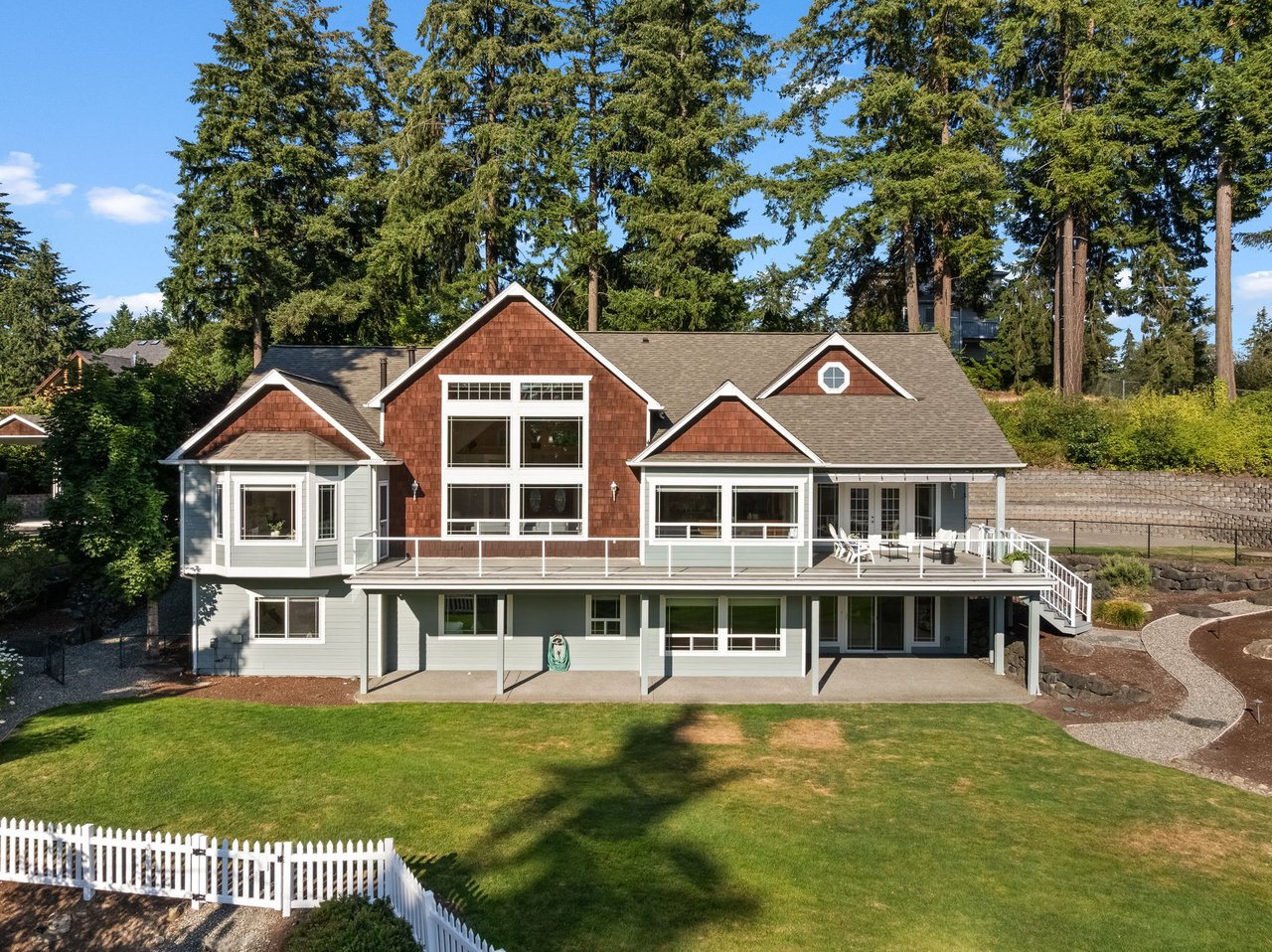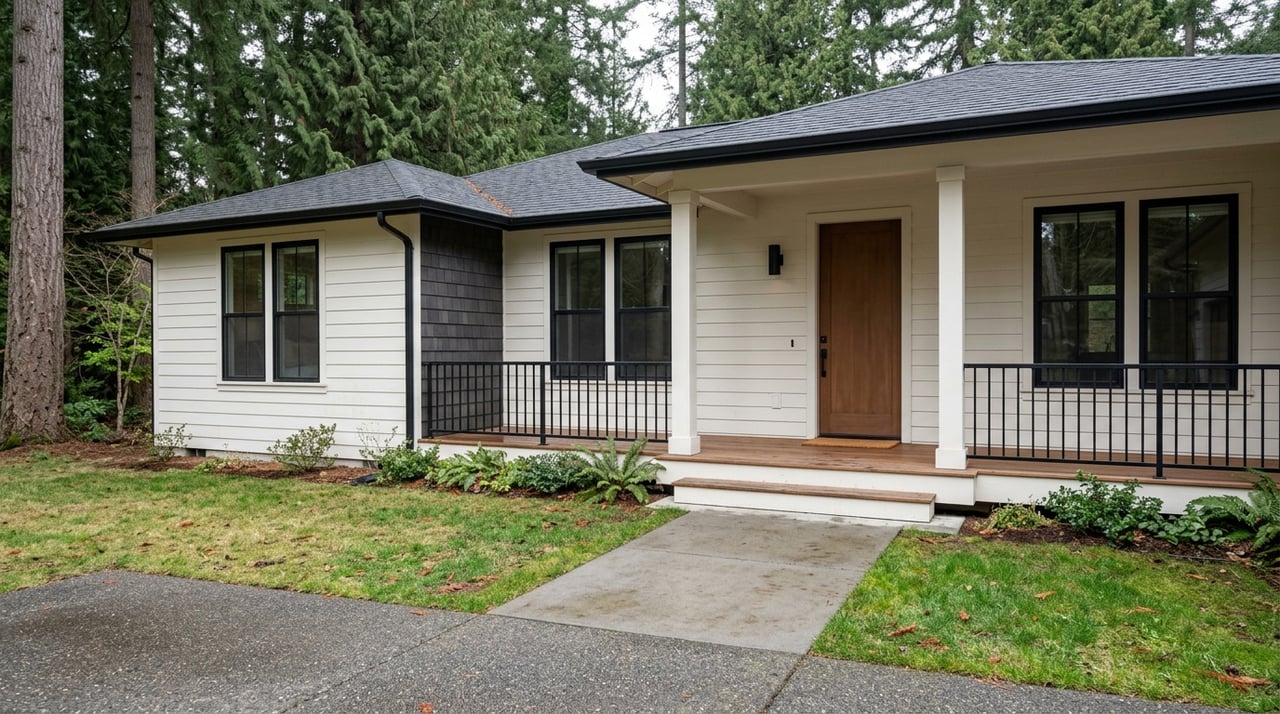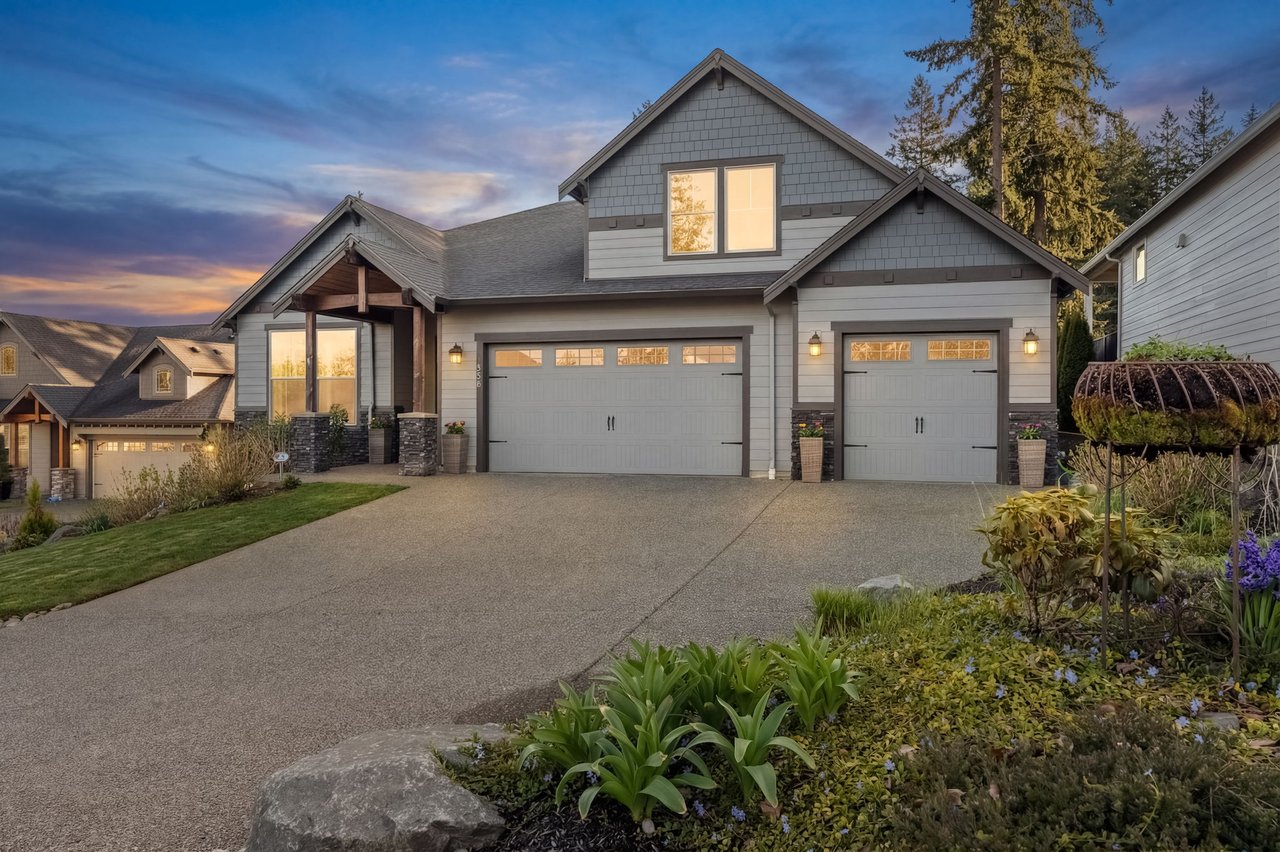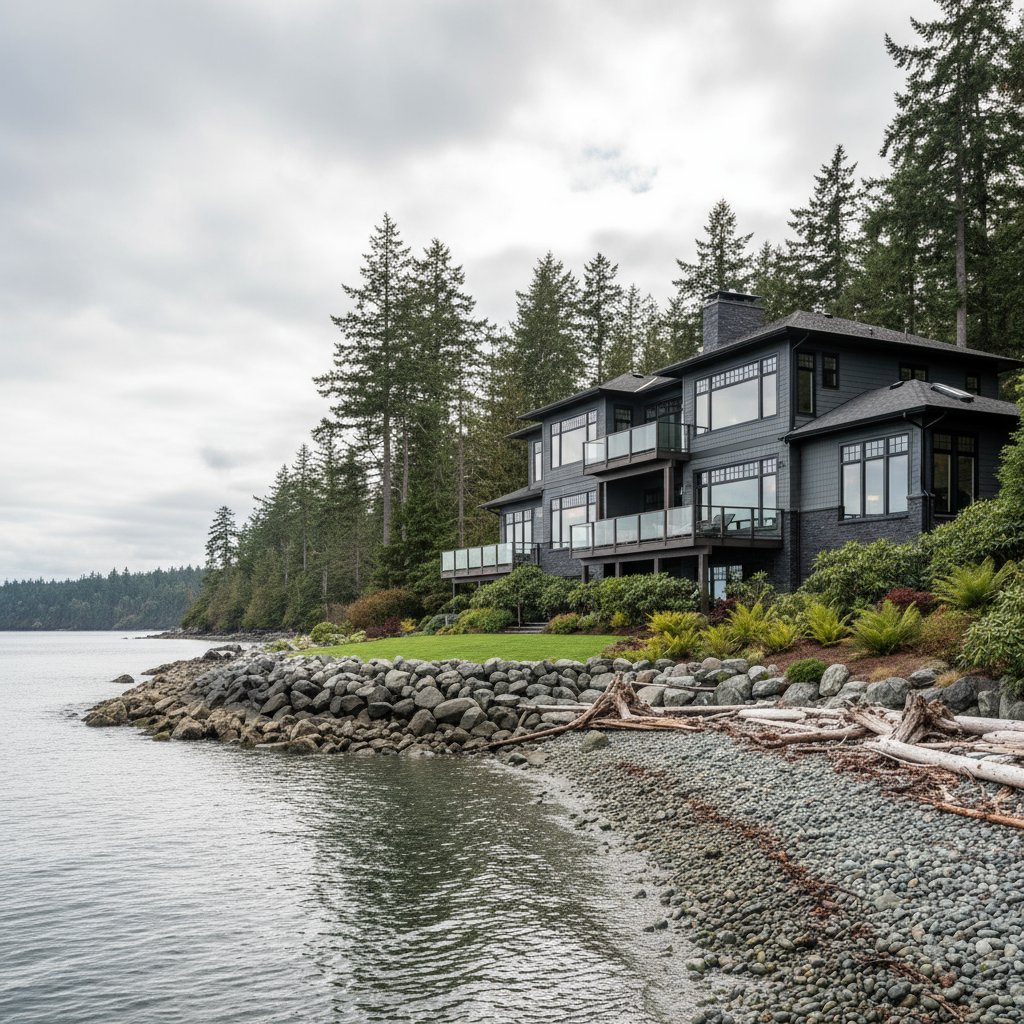
Every listing description for Wollochet Bay mentions septic in the same breath as evergreen slopes and sheltered water, as if the two were the same kind of fact. They are not. One is scenery. The other is a system that has to pass a Pierce County inspection before your closing date means anything, and on this particular stretch of shoreline, the answer to "is this house on septic" is not automatic. It depends on the address.
Most of Wollochet Bay runs on individual on-site septic systems, and Catt Johnson's own neighborhood guide says as much: septic systems are common here, with natural gas service available in select locations. That is the assumption baked into every buyer conversation before a showing even happens. But the City of Gig Harbor's 2024 utilities planning documents describe something the assumption skips over: the city treats septic effluent piped in from a 68-unit housing development on Wollochet Bay that sits in unincorporated Pierce County, outside city limits, under an arrangement with the Wollochet Harbor Sewer District. That development's wastewater does not behave like the rest of the neighborhood's. It flows to a city system instead of sitting in an individual tank and drainfield on the parcel.
That single carve-out is the reason a seller cannot treat "Wollochet Bay" as one septic answer. The real question is address-specific, and it is the first thing to confirm, not assume, when a listing goes on the market here.
Why the Distinction Carries More Weight Here Than Elsewhere
A septic system anywhere in Pierce County has to clear the same paperwork before a sale closes. What makes Wollochet Bay a different conversation is what the tank sits above. Pierce County's shoreline planning documents have identified restricted and prohibited shellfish-growing areas in Wollochet Bay, tied to water quality impairments in the bay's shallow, slow-flushing inlet. The bay's marine waters carry an extraordinary quality, or Class AA, classification for aquatic life, a standard that extends to the freshwater tributaries that feed it, including Wollochet Creek.
None of that changes the mechanics of a Report of System Status inspection. It changes what a marginal system means once it's found. On a body of water where shellfish growing area restrictions and nutrient sensitivity are part of the documented record, a septic system that is functioning but aging is not a private matter between the seller and the county. It's sitting on a shoreline where water quality problems have already been mapped, which is exactly the kind of context a buyer's inspector, lender, or agent tends to ask more questions about.
What the Report of System Status Actually Requires
Pierce County does not let a septic-served property change hands without documentation. The process is called a Report of System Status, or RSS, and it runs through the Tacoma-Pierce County Health Department. Here's the sequence as the department lays it out:
- Hire a certified company for a Property Sale inspection. The county maintains its own list of certified septic service providers, and the inspection has to come from one of them.
- The tank gets pumped at the time of inspection. This isn't optional. Pumping happens as part of the inspection, not as a separate maintenance step scheduled later.
- The inspector logs findings into OnlineRME, the county's electronic septic records database, which is also where sellers and buyers can look up existing as-built drawings and prior service history by address.
- The RSS application goes to the county for review. Inspections completed up to six months before the application is submitted are accepted, so a seller who gets ahead of a spring listing can bank that inspection.
- The county targets a 10-business-day review, though its own guidance is direct about this: it cannot be rushed or guaranteed. Submitting early is the only lever a seller actually controls.
- Once issued, the RSS is valid for one year.
There's a release valve if a system has problems that can't be fixed before closing: a 90-day conditional RSS, which lets a sale proceed while the buyer takes on responsibility for resolving the deficiencies within 90 days of the sale. It's a real option, but it shifts risk onto the buyer's side of the table, and it tends to show up in negotiated price or repair credits rather than getting waived quietly.
What Moves the Cost
Pierce County's soil is not uniform, and that matters more here than the marketing copy suggests. Glacial outwash soils drain well and typically support a compact, conventional drainfield. Glacial till, which is common on the sloped lots that define much of Wollochet Bay's terrain, often can't support a conventional system and instead needs a mound, a pressure system, or a proprietary treatment unit. Those alternative systems carry an annual inspection requirement rather than the standard three-year cycle for a straightforward tank-and-gravity setup, under the state's own septic rule, WAC 246-272A-0270.
That distinction shows up in the eventual cost of a repair or replacement, which local septic contractors serving Pierce County put in a range of roughly $8,000 to $25,000 depending on the system type. A conventional gravity system on outwash sits at the low end. A mound or pressure system engineered for a sloped, till-heavy Wollochet Bay lot sits well above it. Knowing which category a given property falls into, before a buyer's inspection surfaces it as a surprise, is the difference between a smooth negotiation and a scramble.
The Deadline That Makes This Everyone's Problem Soon
Pierce County has required an RSS at time of sale for a while now. What's changing is the map. Washington is adding a statewide septic transfer requirement effective February 1, 2027, which means the documentation Pierce County sellers already navigate is about to become standard practice for septic-served properties everywhere in the state, not just here.
For anyone planning to sell on Wollochet Bay in the next year or two, that timeline is worth sitting with. The county process already exists and already has a real turnaround time attached to it. Sellers who understand it now aren't waiting on a new state system to figure itself out later. They're already running the process the rest of the state is about to adopt.
Planning Around It
The practical takeaway for a Wollochet Bay listing is sequencing. Confirm which system serves the specific parcel, individual septic or the sewer district arrangement, before assuming either. If it's individual septic, get the inspection scheduled early enough that the six-month acceptance window and the 10-business-day review target both work in your favor rather than against your closing date. And if the inspection turns up a deficiency, decide early whether a repair before listing or a 90-day conditional RSS after an accepted offer makes more sense for the property and the price you're trying to protect.
A Few Questions Worth Answering Directly
Does every home on Wollochet Bay have its own septic tank? No. Individual on-site septic is the norm across most of the neighborhood, but a documented exception exists: a 68-unit development in unincorporated Pierce County has its effluent treated by the City of Gig Harbor under an arrangement with the Wollochet Harbor Sewer District. Confirm which category applies to a specific address rather than assuming based on the neighborhood's general reputation.
How long is a Report of System Status good for once it's issued? One year from issuance, according to Tacoma-Pierce County Health Department guidance. A seller who gets the RSS early in a listing period still has a reasonable window if the sale takes longer than expected.
What happens if the system doesn't pass inspection right before closing? The county's 90-day conditional RSS lets a sale proceed with the buyer taking on responsibility for resolving the identified deficiencies within 90 days of closing. It's a legitimate path, but it typically shows up as a negotiated credit or price adjustment rather than something that disappears from the deal.
Septic paperwork is not the romantic part of selling a home on the water. But on Wollochet Bay, where the bay itself carries documented water quality sensitivity and where the neighborhood's own infrastructure isn't as uniform as it looks from the listing photos, it's the part that actually determines whether a closing date holds. If you're weighing a sale here and want to walk through what your specific address requires before it goes on the market, Catt Johnson is a call away. Book a call and get the sequence right from the start.